


1 / 4
ALOCASIA
Alocasia longiloba 'Black Satun' Pink
Ready to ship
Collectable Item
Pink Plant
Statement Piece
6 616,00 kr
Ships from Sweden · Tracked · Live Arrival Guarantee
Free standard shipping on all orders over €150
Standard shipping from €16
Pay with Klarna, PayPal, Apple Pay, Shop Pay or card
The specs
★ Collector Specimen
One of this season's highlighted specimens. Hand-selected, photographed as the exact plant you receive.
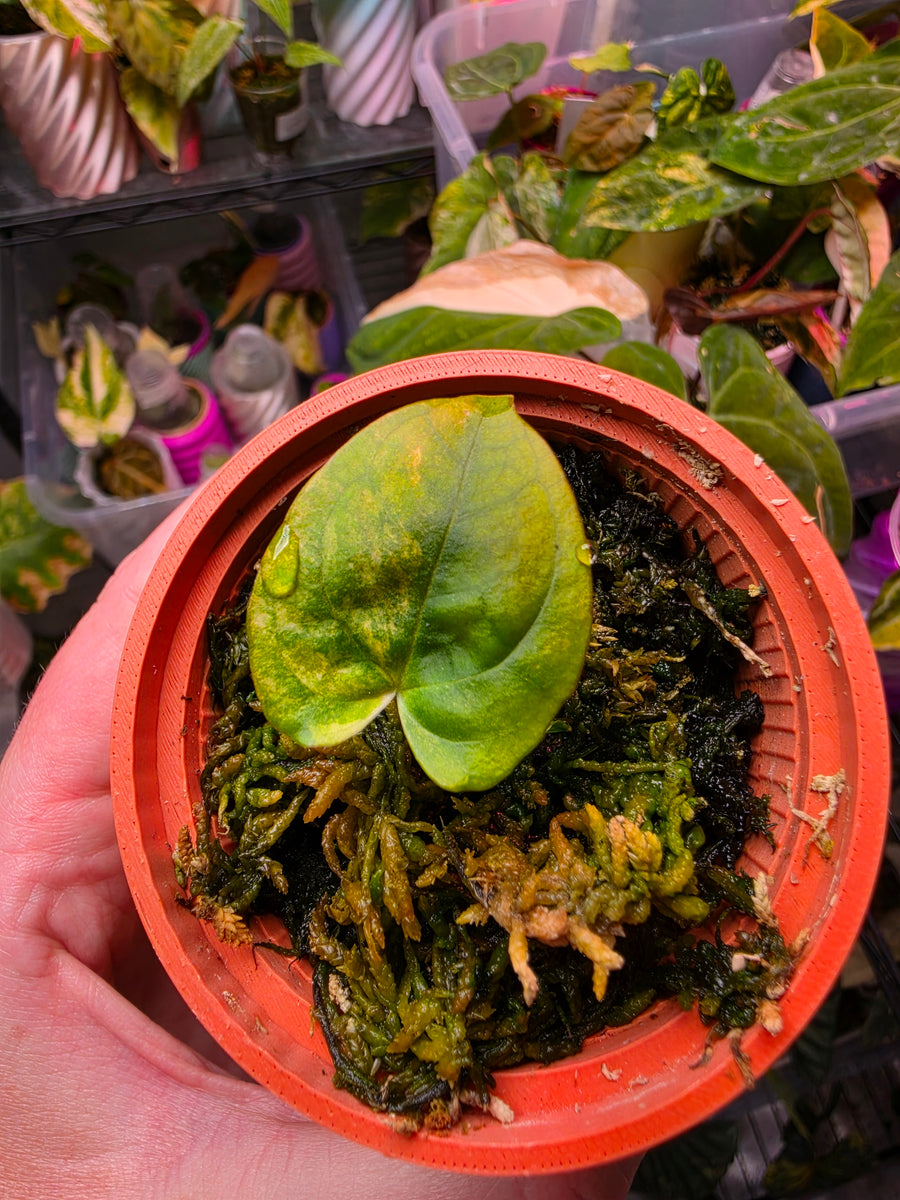
Alocasia longiloba 'Black Satun' Pink. A Thai longiloba cultivar — deep, near-black wing-shaped blades with bold pale veins — here broken with anthocyanin pink: blush-to-rose marbling that runs from a small moon to a full sector. No two leaves alike.
The cultivar
'Black Satun' is a Thai-bred selection in the Alocasia longiloba group, named for the southern province. It is prized for its sculptural, near-black, glossy 'stingray' leaf — tapered and wing-shaped, with pronounced raised veins carried on sturdy upright petioles. Compact in habit but imposing in presence.
The 'Pink' is the anthocyanin-variegated form: irregular blush, pink and rose marbling over the dark blade, different on every leaf. The pink is pigment-based and inherent to the line — relatively stable rather than a reverting pink — and it deepens with bright light and slightly cooler (not cold) growing. Extent varies, from a small flush to broad sectors.
This specimen
- Stage: juvenile
- Leaves: 2
- Pot: 5cm
- Variegation: Visible pink across current growth
- Notes: Acclimated and ready to ship
One specimen. Photographed as received. No restock.
Care, briefly
- Light: Bright indirect, and generous — light holds the pink and the dark contrast. Direct sun scorches the variegation.
- Water: Lightly moist, never soggy. Let the top layer dry slightly before watering; longiloba rots fast with wet feet.
- Humidity: 60%+. Variegated edges brown fast in dry air.
- Mix: Chunky, well-draining aroid mix — airy at the roots.
- Warmth: 20–27°C. No cold draughts, nothing below 15°C — though slightly cooler growing within range can push more pink.
- Pace: A rhythmic grower — the longiloba group pauses between flushes. Gaps are normal, not a fault.
Thank you for collecting with us.
The plant
I have no interest in shady business, unrealistic promises, or pretending that everything is flawless.
— Tess, Founder
COLLECTOR REVIEWS
What other collectors say.
YOU MAY ALSO LIKE
More collector picks.
Anthurium Papillilaminum × Ace of Spades DF | Dark Velvet Collector Clone

Anthurium (Papillilaminum × Crystallinum) × Portillae Open — Variegated Seedling #6

Anthurium (Papillilaminum × Crystallinum) × Portillae Open — Variegated Seedling #5

Anthurium (Papillilaminum × Crystallinum) × Portillae Open — Variegated Seedling #4

Anthurium (Papillilaminum × Crystallinum) × Portillae Open — Variegated Seedling #3

Anthurium (Papillilaminum × Crystallinum) × Portillae Open — Variegated Seedling #2
ONE SPECIMEN
Once it's gone, it's gone.
Each specimen is one of a kind. When this one is secured, it's gone for good.