

Anthurium Papillilaminum × Ace of Spades DF | Dark Velvet Collector Clone
Every figure here describes the specimen in the photographs as it is today, not the mother plant.
★ Collector Clone · One Only
Not a seedling. A clone — the mother is on the last photo, and this becomes her.
Anthurium papillilaminum × 'Ace of Spades' — dark form. One of the heaviest velvet crosses in the genus, taken as a clone from a selected mother rather than grown from seed.
Mother plant on the last photo.
The cross
Papillilaminum brings the pebbled, light-absorbing leaf surface and the long, elegant blade. 'Ace of Spades' brings depth of colour and the broad, heavy-shouldered form. Together they produce the matte near-black velvet with pale venation that this pairing is known for — and the dark form selection pushes it further than a standard seedling of the same cross.
Why a clone matters
Seedlings of this cross are a lottery — some come out dark, most do not. A clone is not. It is vegetative material from a specific mother, so it carries her exact genetics and will mature into the plant on the last photo.
You are not buying potential here. You are buying a known outcome, several years earlier and at a fraction of what the mother is worth.
This specimen
- Cross: Anthurium papillilaminum × 'Ace of Spades', dark form
- Type: Clone — genetically identical to the mother shown
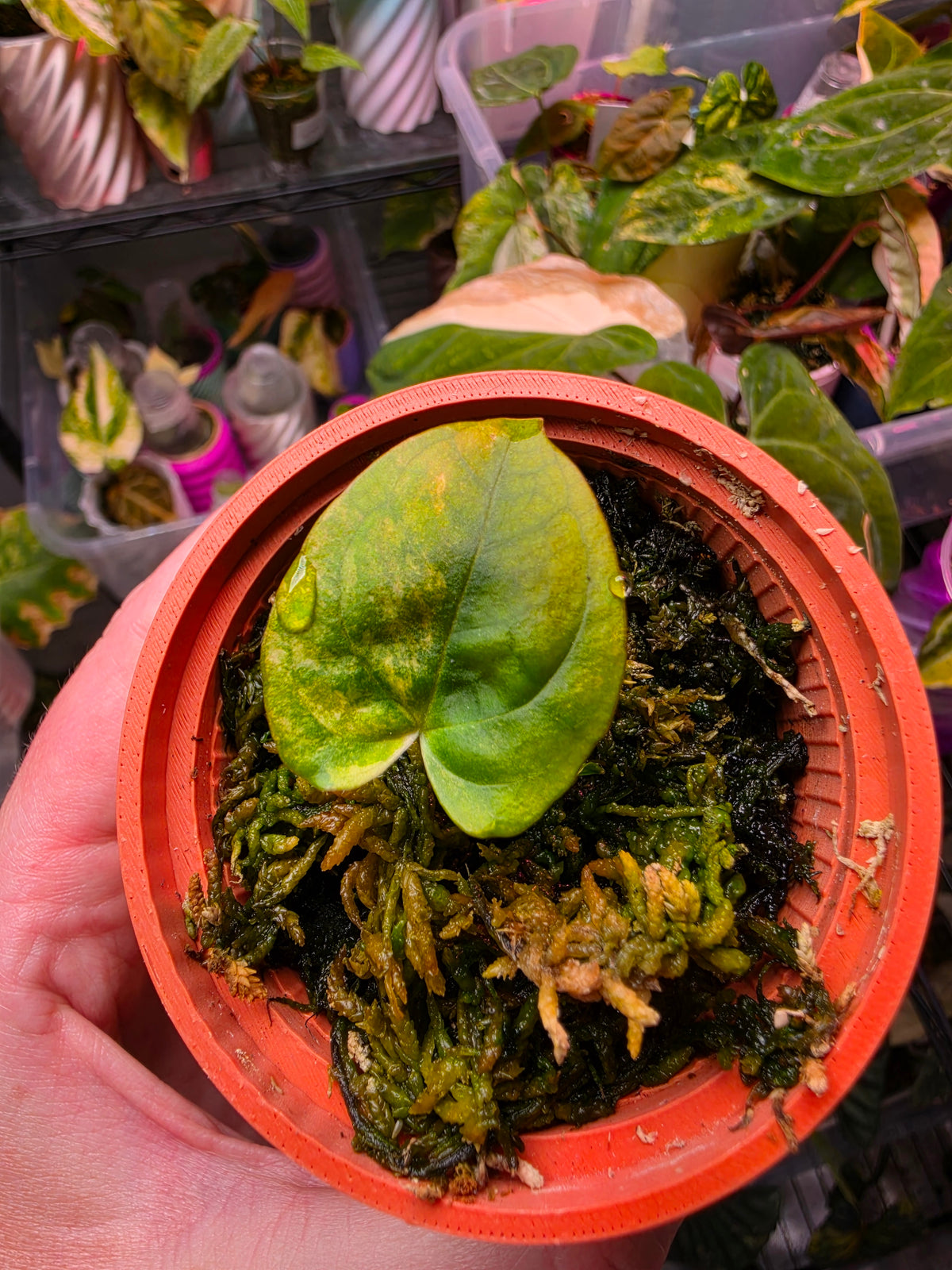
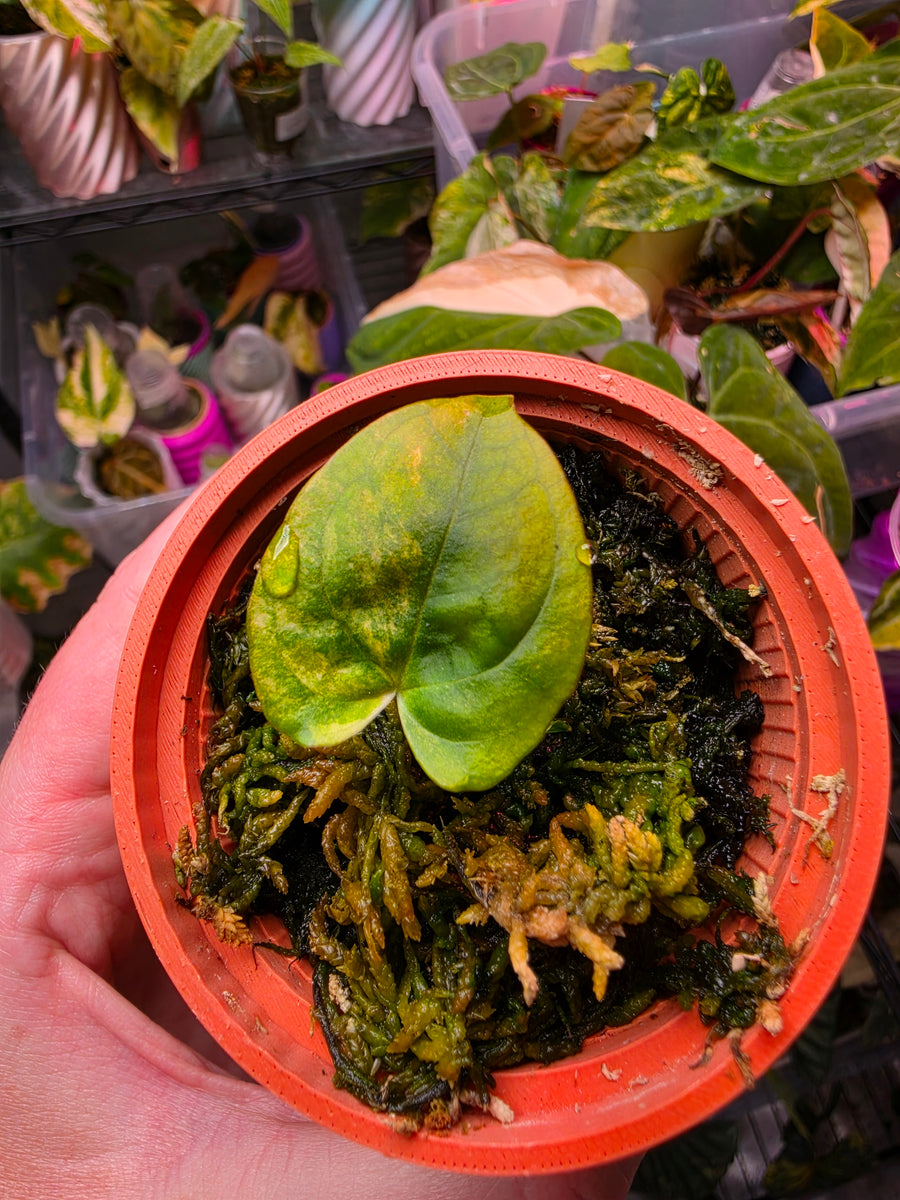
- Leaves: 1
- Ships: in its current pot — minimum stress, maximum arrival health
- Availability: One only. No second, no restock.
- Notes: Acclimated and rooted. A young clone at one leaf — it will size up steadily under stable conditions.
Care, briefly
- Light: Bright indirect, never direct. Velvet leaves scorch and lose their matte surface permanently in sun.
- Water: Evenly moist, never wet. Keep water off the blade — velvet marks.
- Humidity: 70%+. This cross holds leaf quality on humidity more than on anything else. A cabinet or enclosed setup is the honest recommendation at this stage.
- Mix: Airy, chunky epiphytic mix — bark, perlite, charcoal — fast-draining.
- Warmth: 20–27°C. No cold draughts, nothing below 15°C.
- Handling: Do not repot on arrival. Let it settle and push a leaf first.
- Pace: Each leaf should come larger than the last. Judge it on leaf three, not leaf one.
Thank you for collecting with us.
The photograph is not an illustration of what your plant might become. It is the specification.