
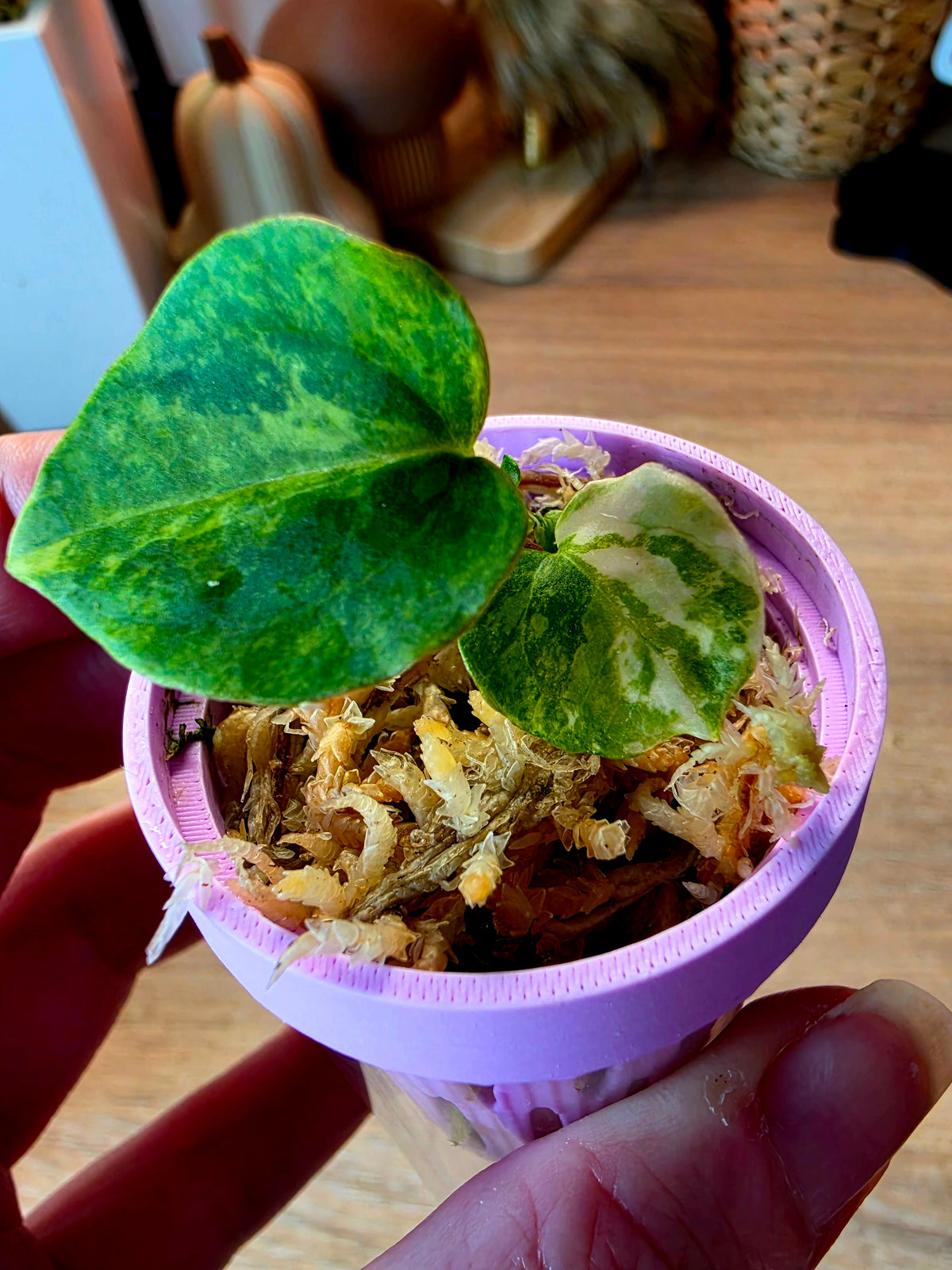
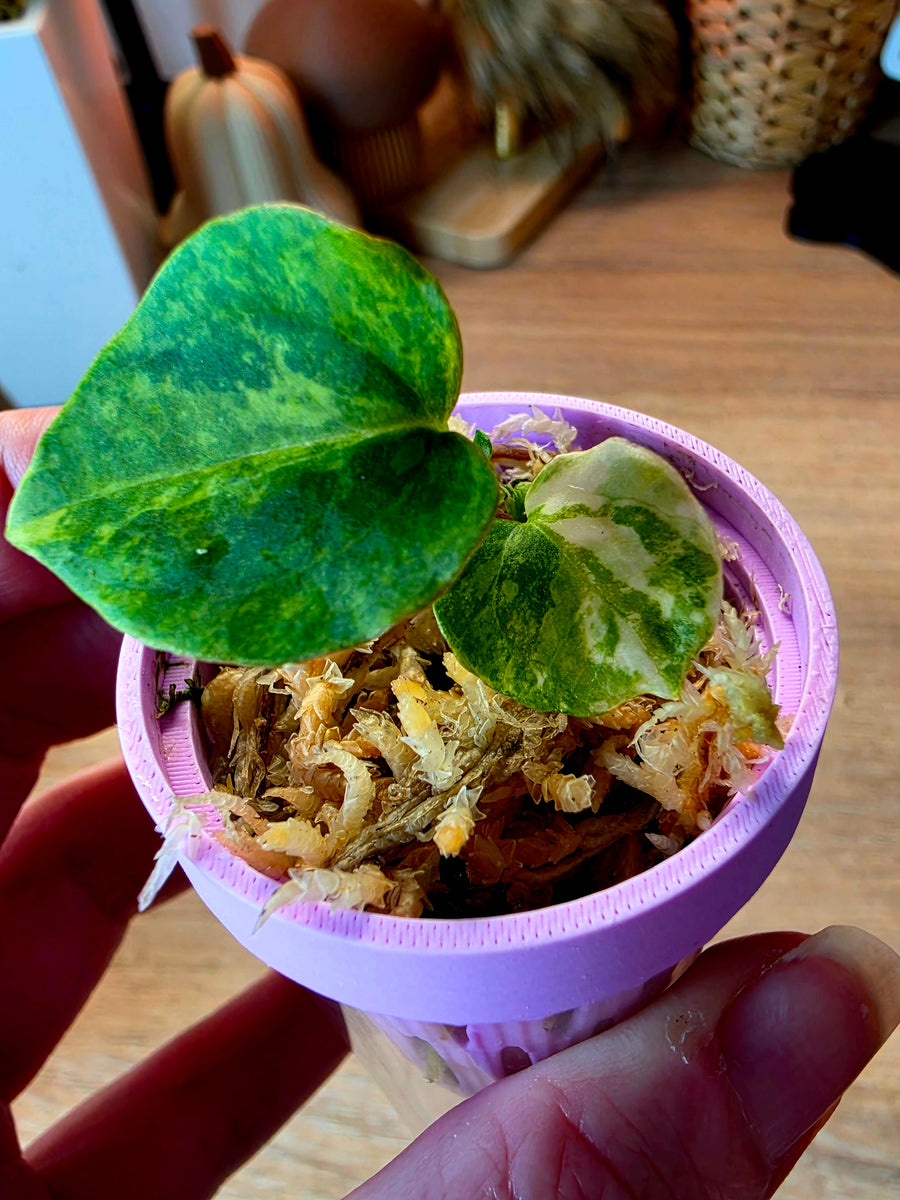


Anthurium (Papillilaminum × Crystallinum) × Portillae Open — Variegated Seedling #4
Every figure here describes the specimen in the photographs as it is today, not the mother plant.
★ Variegated Collector Seedling · One Specimen
Same batch as the green grow-outs — except this one already shows it.
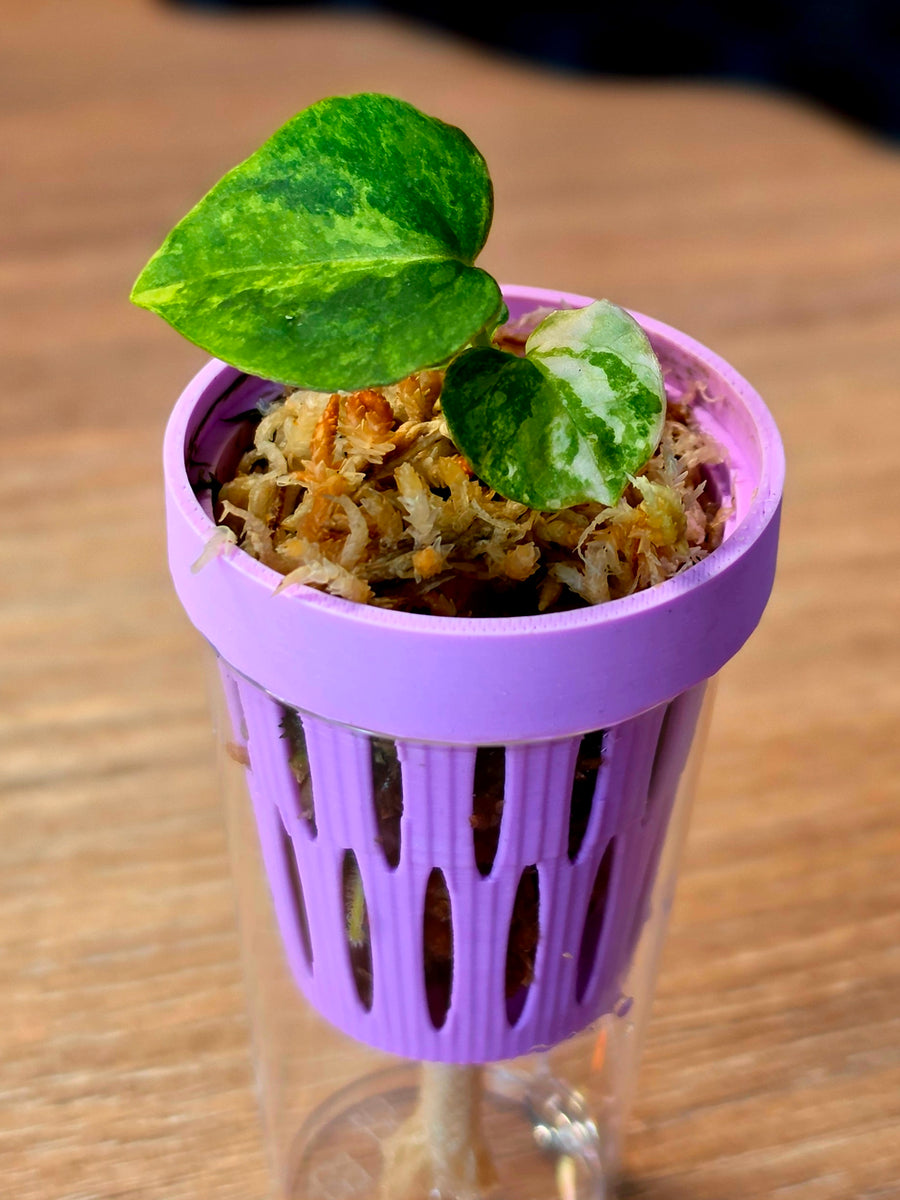
Anthurium (Papillilaminum × Crystallinum) × Portillae (Open) — Variegated. The exact plant in the photos. Variegation visible on current growth.
Mother plants on the last photos. Portillae Open is the pollen parent.
The cross
The seed side, papillilaminum × crystallinum, is one of the most respected velvet pairings in the genus — dark, matte leaf with crystalline silver veining and red-flushing new growth. The pollen side is Portillae, open-pollinated, adding its own velvet form and leaf structure to the mix.
Open pollination means every seedling in the batch is a genuine roll of the dice. No two grow out alike, and the lineage cannot be repeated — the same pollen event will never happen twice.
Why this one is different
The majority of this batch came out green — those are listed separately as grow-out seedlings. A small number expressed variegation early. This is one of them, and there are only six in total.
Variegation this early in a velvet Anthurium seedling is uncommon, and it is what separates a €35 grow-out from a specimen you build a collection around.
What you're buying
The exact seedling photographed. Variegation is present now, but seedling variegation is by nature unstable — it can strengthen, shift pattern, or revert as the plant matures. That risk is priced in, and it is part of what makes growing one out worth doing.
This specimen
- Stage: seedling
- Variegation: present on current growth — see photos
- Parentage: (Papillilaminum × Crystallinum) × Portillae Open, from variegated mothers
- Pot: 5cm
- Included: Inner pot
- Availability: One specimen. Six variegated in total from this batch. No restock.
- Notes: Acclimated and ready to ship.
Care, briefly
- Light: Bright indirect — never direct. Variegated tissue scorches faster than green.
- Water: Lightly and evenly moist, never wet. Keep water off the leaves.
- Humidity: 65%+. Stable humidity is what keeps a variegated seedling pushing clean leaves.
- Mix: Airy, chunky epiphytic mix — bark, perlite and charcoal — fast-draining.
- Warmth: 20–27°C. No cold draughts, nothing below 15°C.
- Pace: Variegated seedlings grow slower than their green siblings. Give it stable conditions and let it build leaf count before you judge the pattern.
Thank you for collecting with us.
The photograph is not an illustration of what your plant might become. It is the specification.